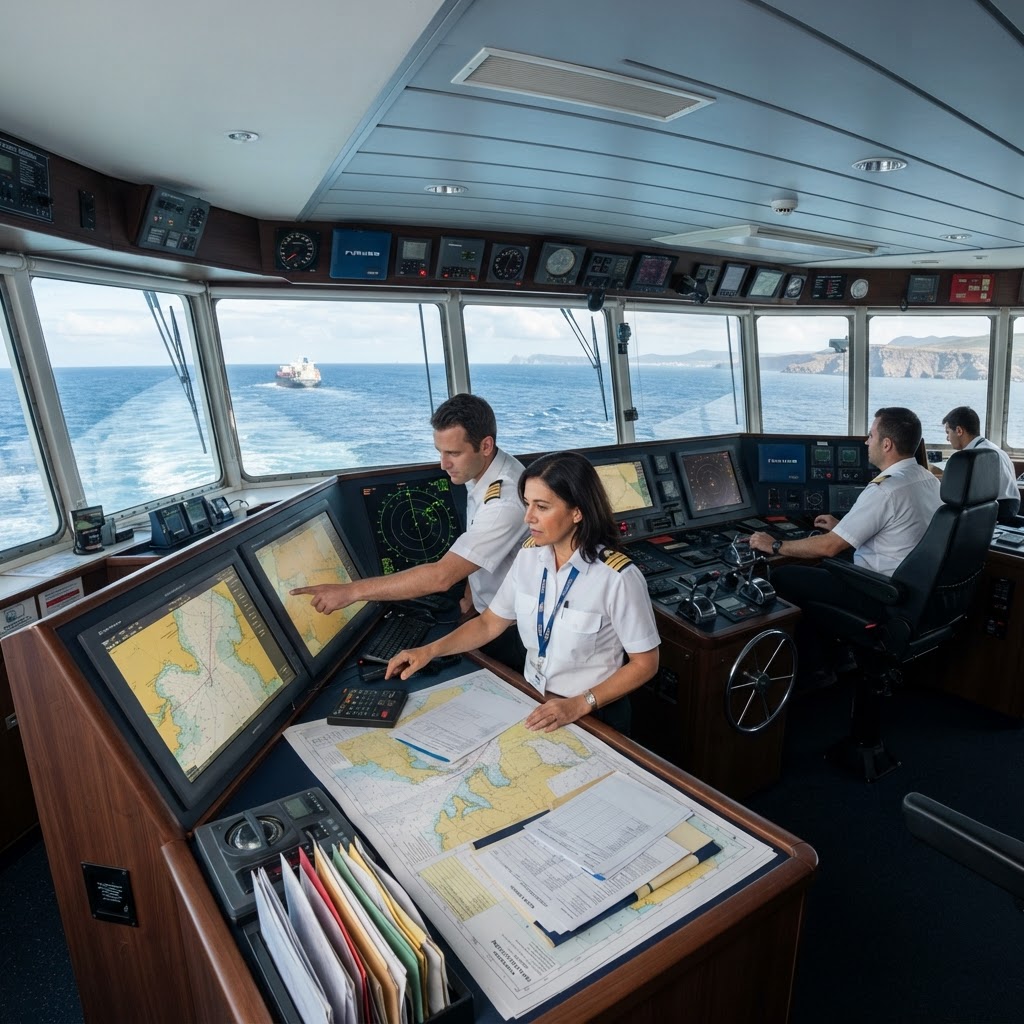
BRM and Planned Course Changes: How to Answer This MCA Oral Exam Question
Understanding BRM in the Context of Planned Course Changes
When faced with the MCA oral exam question, "In the context of Bridge Resource Management (BRM), when deciding on a planned course change, the Chief Mate should consider which factor most critically?", the direct and correct answer is weather and sea conditions at the time of the change. While many candidates focus heavily on traffic density or ECDIS alarms, the MCA examiners are looking for a deep understanding of how environmental factors influence ship handling, stability, and navigation safety during critical maneuvers.
Why Weather and Sea Conditions Are Critical for the MCA Oral Exam
For an Officer of the Watch (OOW) or a candidate aiming for their Chief Mate (Unlimited) certificate, demonstrating a holistic approach to bridge management is vital. The examiner uses this question to assess if you understand the dynamic relationship between a planned route and the external environment. A plan that looks perfect on paper can become dangerous if a vessel encounters a beam sea or heavy swell during a course alteration, particularly on vessels under 3000GT or large commercial ships.
The Relationship Between BRM and Environmental Factors
Bridge Resource Management is not just about communication; it is about situational awareness. The critical decision-making process involves:
- Vessel Response: How will the ship respond to the helm once the course is altered? If the vessel is already rolling significantly, a course change might induce greater instability or cargo shifting.
- Propulsion and Steering: In high winds, the ship's windage area may result in excessive leeway, meaning the planned course change might not result in the desired track over ground (TOG).
- Engine Readiness: Does the current sea state require the Chief Mate to increase engine readiness or inform the Engineering department before a significant change in heading?
Practical Application: What the Examiner Wants to Hear
When you are at the table for your MCA oral, the examiner is testing your ability to move beyond rote memorization. They want to see that you understand the consequences of your decisions.
Scenario Analysis
Imagine you are navigating a vessel in moderate conditions. You are approaching a waypoint that requires a 30-degree course change. The examiner will likely prompt: "You have your planned change, but the weather has deteriorated. What do you do?"
- The Wrong Answer: "I carry out the change as planned because it is on the passage plan."
- The Correct Approach: "I would assess the current sea state and wind direction relative to the new heading. If the new heading places the vessel in a beam sea that could compromise stability or cause heavy rolling, I would consult the Master, re-evaluate the passage plan, and consider delaying the turn or adjusting speed to minimize the effect of the weather."
Common Pitfalls and How to Avoid Them
- Ignoring the Human Factor: BRM is about the bridge team. If you decide to change course in bad weather, have you briefed the lookout and the helmsman? Examiners will ask: "How do you communicate this change in conditions to your team?"
- Focusing Only on Collision Avoidance: While COLREGS are paramount, the examiner wants to know that you are not so focused on avoiding one ship that you forget the environmental safety of your own vessel.
- Lack of Vessel Knowledge: You must demonstrate an understanding of your ship's specific limitations. Does your ship suffer from excessive squat or squat-related phenomena in shallow water during heavy weather maneuvers?
Exam Tips for Success
- Use Maritime Terminology: Use words like leeway, set and drift, windage, hull vibration, and dynamic stability.
- Link to Passage Planning: Always connect your answer to the passage plan. A passage plan is a living document; if the weather changes, the plan must be adapted.
- Stay Composed: If the examiner challenges your answer, defend your reasoning by citing safety. The MCA prioritizes safety of life and the vessel above all else.
Conclusion: Key Takeaways
For the OOW and Chief Mate candidates, mastering the art of BRM is essential for the MCA oral exam. When considering a planned course change, always prioritize the weather and sea conditions. Ask yourself: Will this change place the ship in an unfavorable position relative to the environment? By demonstrating this level of foresight, you show the examiner that you are prepared for the responsibilities of a professional mariner.