Chief Mate Responsibilities in Passage Planning: MCA Oral Exam Guide
Understanding Chief Mate Responsibilities in Passage Planning
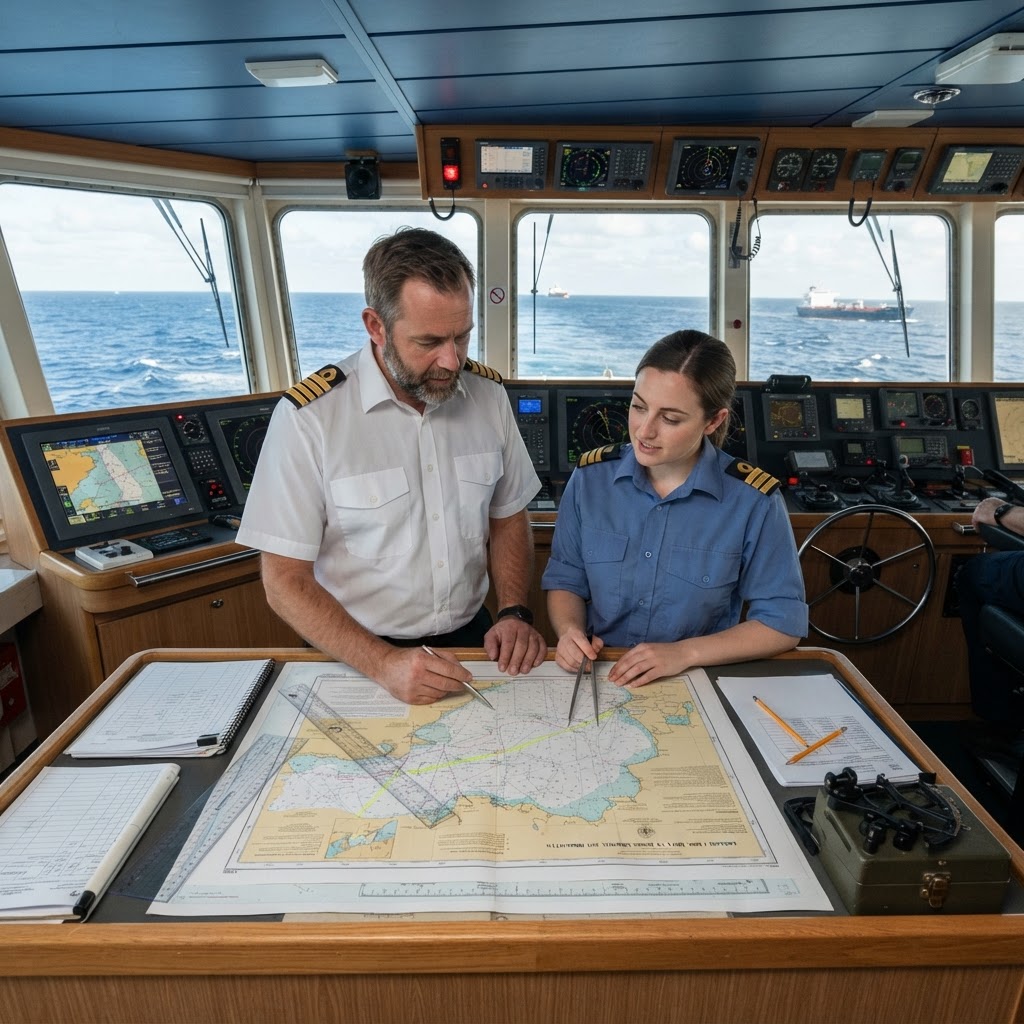
When facing an MCA oral exam for your Chief Mate (Unlimited) certificate, you will inevitably be tested on the intricacies of the bridge management team. A common trap for candidates is the misconception that the Chief Mate operates in a vacuum. Specifically, if you are asked, "Which of the following is NOT a direct responsibility of the Chief Mate concerning passage planning?", the correct answer is: Drafting the initial passage plan alone.
While the Chief Mate is the senior bridge officer responsible for the execution and coordination of the passage plan, the drafting process is fundamentally a collaborative effort. An examiner is looking for your understanding of Bridge Resource Management (BRM) and the realization that a 'single point of failure' in the planning stage is a direct violation of safety management systems.
Why This Distinction Matters for the MCA Oral Exam
The MCA expects a Chief Mate to demonstrate leadership and technical oversight. If you tell an examiner that you draft the passage plan alone, you signal that you might be failing to utilize the expertise of your Second Officer (the primary navigator) or failing to incorporate the Master’s specific standing orders and preferences.
In the context of the OOW oral exam or the progression to Chief Mate, the examiner is testing your ability to manage the ship’s resources. A passage plan for a vessel over 3000GT requires input from various departments, including engineering (for fuel constraints) and deck (for cargo operations and security).
The Collaborative Nature of Passage Planning
Passage planning under SOLAS Chapter V, Regulation 34, requires a comprehensive approach. The Chief Mate’s role involves:
- Review and Validation: Checking the work of the Second Officer to ensure it complies with the Master's voyage orders.
- Risk Assessment: Coordinating the identification of hazards throughout the route.
- Resource Coordination: Ensuring that the bridge team, including the OOW and helmsman, understands the plan through a thorough pre-departure briefing.
- Compliance: Ensuring the plan meets company SMS requirements and Flag State regulations.
When you claim to perform the drafting alone, you are effectively ignoring the professional development of the OOW and increasing the risk of human error by removing the 'four-eyes' principle from the initial creation phase.
Common Pitfalls and Examiner Expectations
Many candidates make the mistake of over-emphasizing their technical skill at the expense of their management capability. When discussing passage planning in your MCA oral, keep these points in mind:
- Delegation vs. Abdication: You should delegate the drafting to the navigation officer (usually the 2nd Mate), but you never delegate the responsibility for the quality and safety of the final document.
- The Master’s Role: Always emphasize that the final approval rests with the Master. A Chief Mate who writes a plan without the Master’s direct input or review of the critical points is setting the ship up for failure.
- Dynamic Planning: Remind the examiner that the plan is a living document. Even if the initial drafting is a team effort, the ongoing monitoring and adjustment during the voyage remain the primary duty of the Officer of the Watch under your supervision.
Practical Exam Tips
- Use Maritime Terminology: When speaking to the examiner, use phrases like "BRM," "Safety Management System," "Master's Standing Orders," and "Compliance with SOLAS V/34."
- Be Prepared to Elaborate: If the examiner asks, "If you aren't drafting it, what are you doing?", have a clear answer: "I am setting the parameters, reviewing the navigational safety, ensuring the charts are corrected, and verifying that the plan aligns with the vessel's draught and cargo requirements."
- Focus on Safety: Always tie your answer back to the safety of the vessel, crew, and environment. A solo planner is a safety risk.
Conclusion
Passing your Chief Mate or OOW oral exam requires a shift in mindset from being the person who does all the work to the person who ensures all the work is done correctly. Understanding that drafting the initial passage plan is a team effort rather than a solo task demonstrates that you are ready for the management level. Remember, your goal is to showcase your ability to coordinate, verify, and lead, rather than simply proving your ability to plot a waypoint on an ECDIS.