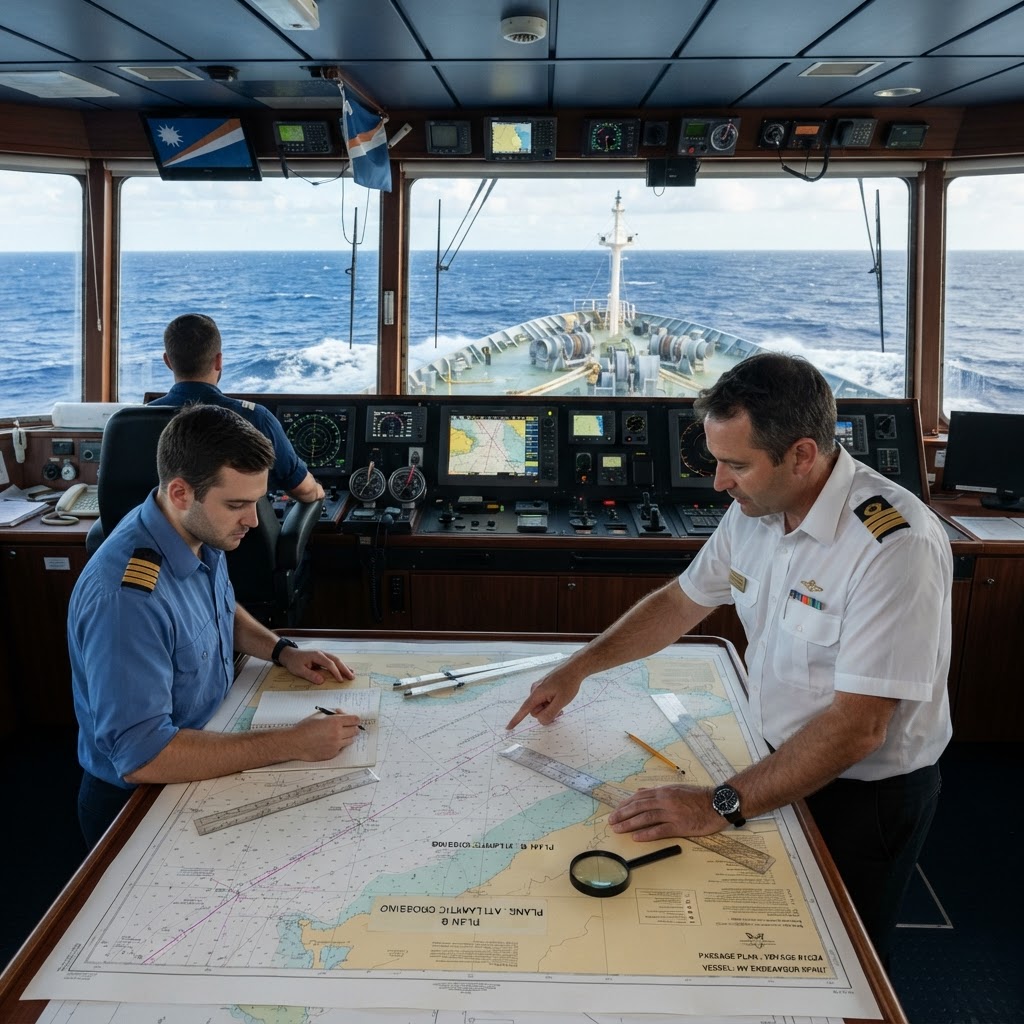
What is the Chief Mate's Responsibility for the SMS? MCA Oral Exam Guide
Understanding the Chief Mate's Role in SMS Compliance
When facing your Chief Mate or OOW oral exam, examiners often shift from technical navigation to the practical application of the Safety Management System (SMS). The core responsibility of a Chief Mate regarding the company’s Safety Management System is to ensure daily crew compliance with the SMS protocols while at sea. While the Master holds the ultimate responsibility for the safety of the vessel, the Chief Mate acts as the operational conduit, ensuring that the procedures outlined in the Safety Management Manual are not merely paper exercises but are actively practiced by the bridge and deck teams.
Why This Question Matters for Your MCA Oral Exam
For candidates pursuing an Unlimited or 3000GT certificate of competency, the examiner is testing your ability to bridge the gap between policy and practice. They want to know if you understand that the SMS is a living document. If you cannot explain how you maintain compliance, you are demonstrating a potential failure in your safety culture, which is a major red flag for any MCA oral assessor.
The Practical Application of SMS Onboard
As the Chief Mate, your duty is to ensure that the crew does not default to 'shortcuts' that bypass company procedures. Compliance includes, but is not limited to:
- Permit to Work Systems: Ensuring that hot work, enclosed space entry, and working at height permits are correctly filled out, authorized, and monitored.
- Toolbox Talks: Verifying that a risk assessment is conducted and discussed with the crew before any hazardous task commences.
- Checklists: Ensuring that every bridge or engine room evolution is supported by the relevant company-mandated checklist.
- Drills and Training: Facilitating shipboard training to ensure the crew is familiar with emergency response plans defined in the SMS.
The Examiner’s Perspective: What are they looking for?
When the examiner asks this, they are looking for evidence of a proactive safety culture. They expect you to articulate how you monitor performance. Don't just say 'I follow the SMS.' Instead, explain the process of oversight. Mention how you conduct informal inspections of work sites, how you audit the permit logs, and how you mentor junior officers or ratings when you spot a deviation from the SMS.
Common Pitfalls and How to Avoid Them
- Passive Responses: Saying 'I make sure everyone follows the rules' is too generic. Be specific. Mention the ISM Code (International Safety Management Code) and the company’s specific procedures.
- Neglecting the 'Why': Don't just focus on the 'what.' Explain that compliance is necessary to prevent incidents, maintain certification, and uphold the company's Document of Compliance (DOC) and the ship's Safety Management Certificate (SMC).
- Lack of Reporting: If you see a non-conformity, you must report it. Failing to mention reporting mechanisms shows a lack of understanding regarding the continuous improvement aspect of the SMS.
Exam Tips for the Officer of the Watch and Chief Mate
- Cite the ISM Code: Briefly mentioning that the SMS is mandatory under the ISM Code adds weight to your answer. It shows you understand the legal framework behind the operational requirements.
- Focus on Documentation: An SMS is only as good as its records. Emphasize that part of your responsibility is ensuring all records (permits, drill logs, maintenance reports) are completed accurately and filed correctly.
- Be Prepared for Follow-up Questions: If you mention permits to work, be ready to describe the specific procedure for entering a ballast tank or working aloft. The examiner will likely pull on that thread.
Conclusion
The Chief Mate serves as the operational manager for safety onboard. Your primary goal is to ensure that every crew member, regardless of rank, adheres to the SMS protocols during daily operations. By actively supervising, providing training, and ensuring documentation is maintained, you not only satisfy the examiner but also ensure the safety of the vessel and the crew. Remember, in your OOW oral exam or Chief Mate assessment, the examiner is checking if you possess the leadership maturity to enforce the 'Safety First' culture required at sea.