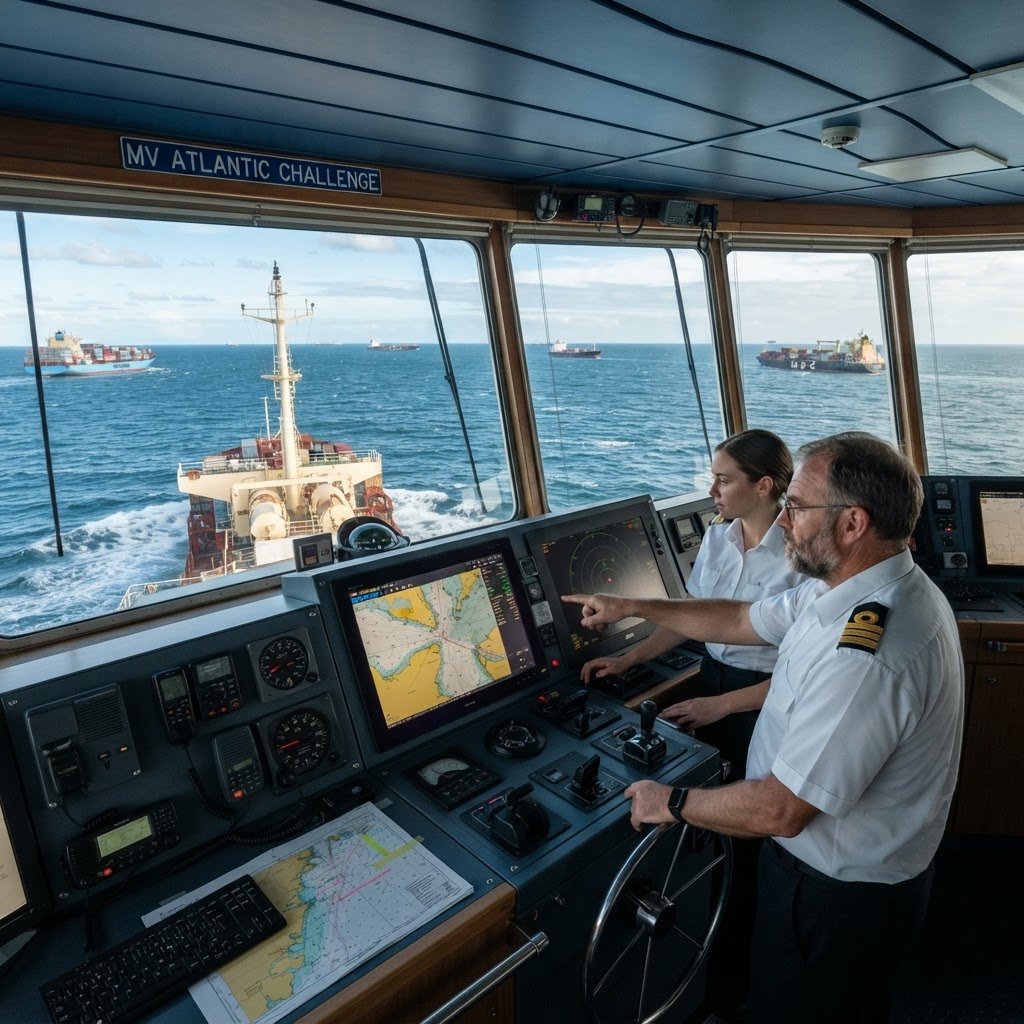
Demurrage Claims in Voyage Chartering: MCA Oral Exam Guide for Officers
Understanding Demurrage and Shipowner Claims in Voyage Chartering
When a charterer fails to provide cargo for loading within the agreed laytime under a voyage charter, the shipowner is entitled to claim demurrage at the rate agreed in the charter party for the time the ship is detained beyond the laytime. This is a key concept for any candidate preparing for the OOW oral exam or the Chief Mate assessment, because it shows you understand the commercial consequences of delays in port.
Why This Topic Matters for Your MCA Oral Exam
Examiners often move from technical navigation to commercial awareness. They aren't looking for a lawyer's answer, but they expect a senior deck officer to understand how delays affect the voyage, and why the ship's records matter so much in a claim. A candidate who can explain laytime and demurrage clearly shows professional maturity and readiness for higher rank.
The Mechanism of Laytime and Demurrage
- Laytime: The time allowed in the charter party for loading and discharging, without extra payment to the owner. It can be a fixed number of days or hours, or calculated from a loading or discharge rate.
- Demurrage: The agreed daily rate the charterer pays the owner when loading or discharging takes longer than the laytime. The saying is: "Once on demurrage, always on demurrage" — once laytime has expired, the usual laytime exceptions (such as weekends or bad weather) no longer interrupt the clock unless the charter party says otherwise.
- Despatch: Some charter parties also pay the charterer a reward (usually half the demurrage rate) for completing cargo operations within less than the laytime.
When laytime has expired and the vessel is still waiting because the cargo is not ready, she is on demurrage. Standard forms such as GENCON set out how laytime is counted and the demurrage rate.
Can the Owner Claim More Than Demurrage?
This is a favourite follow-up question. Under English law, demurrage is liquidated damages: an agreed sum that compensates the owner for the loss of the ship's use while she is detained, including the running costs of that delay. The owner cannot normally claim extra damages for the same delay on top of demurrage. The Court of Appeal confirmed this in The Eternal Bliss (2021).
The owner can recover additional damages only for a separate breach causing a different type of loss — for example, damage to the ship from a charterer's breach, or losses under a specific charter party clause (such as costs of shifting berth for the charterer's convenience). In a time charter there is no demurrage at all: the charterer pays hire for the whole period, and delays in port are at the charterer's risk unless an off-hire clause applies.
Common Pitfalls and Examiner Traps
- Confusing Voyage and Time Charters: Demurrage belongs to voyage charters. Under a time charter the ship is hired for a period and paid for by hire.
- Lack of Evidence: Always mention the Statement of Facts (SOF). The deck logbook and SOF must record arrival, NOR tendering, berthing, start and stop of cargo, and every delay with its reason. If there is a dispute over whether laytime has expired, these records are the owner's evidence.
- Ignoring the Notice of Readiness (NOR): Laytime normally cannot start until a valid NOR has been tendered (and any notice period has run). If the ship is not actually ready, or the NOR is tendered too early, it may be invalid. Failing to mention NOR will make the examiner question your practical knowledge.
Practical Exam Tips for the Chief Mate/OOW Candidate
- Use Maritime Terminology: Use terms like laytime, demurrage, despatch, NOR, Statement of Facts and charter party accurately.
- Be Concise: State clearly that the owner claims demurrage at the agreed rate once laytime has expired, and that demurrage is liquidated damages for the delay.
- Link to Responsibility: Explain that your duty as a senior officer is to help the Master record delays accurately, because those records support the owner's claim.
Conclusion
In the context of the MCA oral exam, know that a charterer's failure to provide cargo within the laytime puts the ship on demurrage, paid at the agreed rate, and that extra damages are only recoverable for a separate breach and a different kind of loss. Emphasise accurate record-keeping in the Statement of Facts and deck log, as these protect the owner's position under a voyage charter.
Updated 25 October 2026: corrected the explanation of what an owner can claim (demurrage is liquidated damages for the delay; extra damages need a separate breach) and added despatch and the time charter position.