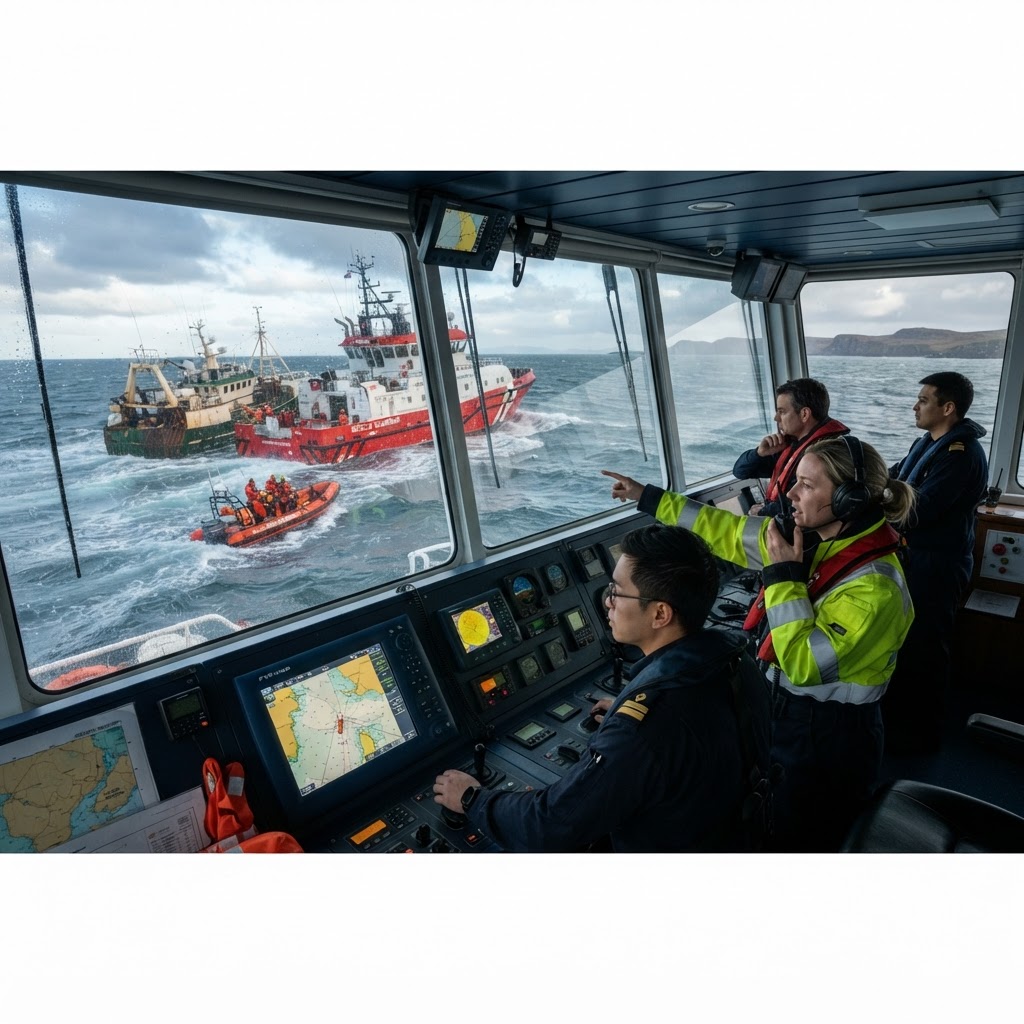
Fire Emergency Procedures: How to Respond to an Engine Room Fire Alarm in Your MCA Oral Exam
The Immediate Action for an Engine Room Fire
When faced with the exam scenario: "A vessel's fire detection system activates an alarm in the engine room at 0200 hours. The OOW confirms smoke visible through the CCTV monitor. What is the immediate first action?", your response must be swift, decisive, and protocol-driven. The correct immediate action is to sound the general alarm immediately to muster all crew, then notify the Master and initiate fire response procedures.
Many candidates overthink the initial response by attempting to investigate or troubleshoot the fire detection panel first. In an MCA oral exam, hesitation is often interpreted as a lack of command ability. The examiner is not looking for a technician; they are looking for a bridge officer who understands the priority of human life and ship safety over equipment preservation.
Why This Question Matters for OOW and Chief Mate Candidates
For any candidate sitting for their Officer of the Watch or Chief Mate certification—whether for 3000GT or Unlimited tonnage—this question tests your leadership under pressure. The examiner wants to see if you can distinguish between an incident that requires investigation and a confirmed emergency that requires an immediate, formalized response.
By sounding the general alarm first, you achieve several vital safety objectives:
- Alerting the crew: Immediate notification provides the maximum time for personnel to reach muster stations.
- Command Presence: It signals to the bridge team and the engine department that a state of emergency exists, moving the vessel into a defensive posture.
- Accountability: It triggers the headcount process, which is the foundation of any successful damage control effort.
Breaking Down the Response Protocol
Once the alarm has been sounded and the Master is notified, your duties as the OOW or Chief Mate follow a structured hierarchy. You must communicate these steps clearly to the examiner to demonstrate a thorough grasp of the vessel's Safety Management System (SMS).
1. Alerting the Bridge and Engine Room
While the alarm is sounding, ensure the engine room is contacted via the talk-back system if safe to do so. However, do not delay the general alarm to perform this task. If you have confirmed smoke via CCTV, the fire is already established, and immediate mustering takes precedence.
2. Notifying the Master
As soon as the alarm is activated, the Master must be informed. In your MCA oral, clarify that you will provide a concise report: location, nature of the hazard (smoke), and the status of the vessel’s positioning. The Master needs to decide whether to maneuver the vessel to prevent smoke from blowing across the bridge or muster stations.
3. Initiating Fire Response Procedures
Your role, depending on your position, involves managing the bridge while the damage control team is deployed. You must mention the following:
- Close fire dampers and ventilation: Preventing oxygen feed is the first rule of fire suppression.
- Prepare life-saving equipment: If the fire progresses, the OOW must ensure that lifeboats are prepared for potential abandonment.
- Communication: Maintain a log of all reports from the fire party and keep the Master updated.
Common Pitfalls and Examiner Tips
Candidates frequently fail this section of the OOW oral exam by adding unnecessary steps. Here are three common mistakes:
- The "Investigation" Trap: Never suggest going to the engine room yourself to check the fire. The OOW must remain on the bridge to navigate the ship and manage the emergency. If the examiner asks, "Would you go down to check?", the correct answer is a firm "No, sir/madam, my place is on the bridge."
- Delaying the Alarm: Some candidates suggest checking the fire alarm panel to see if it is a false alarm. If you have confirmed smoke via CCTV, it is not a false alarm. A delay in sounding the general alarm is a critical failure.
- Overcomplicating Maneuvers: While you should consider changing the course to keep smoke clear of the accommodation, your primary responsibility is the alarm and notification. Do not suggest complex maneuvering before the emergency response is initiated.
Maintaining Command Presence
Whether you are applying for a 3000GT or Unlimited license, the examiner is assessing your ability to act as an officer in charge. When you answer, speak with confidence. Use the specific terminology of your ship’s Emergency Muster List and ensure you reference the SMS regularly. The examiner wants to know that you trust the systems in place—if the smoke is confirmed, you trust the alarm and you sound it.
Conclusion: Key Takeaways for Success
To summarize your approach for the board:
- Prioritize the Alarm: Sound the general alarm immediately upon confirmation of fire.
- Report to the Master: Clear, concise communication is the lifeblood of emergency management.
- Stay on the Bridge: Never abandon your post to fight a fire; your role is coordination.
- Know your SMS: Always frame your answer within the context of the vessel's established emergency procedures.
Mastering these simple, direct protocols will prove to the examiner that you have the temperament and the training required for the responsibilities of a senior deck officer.