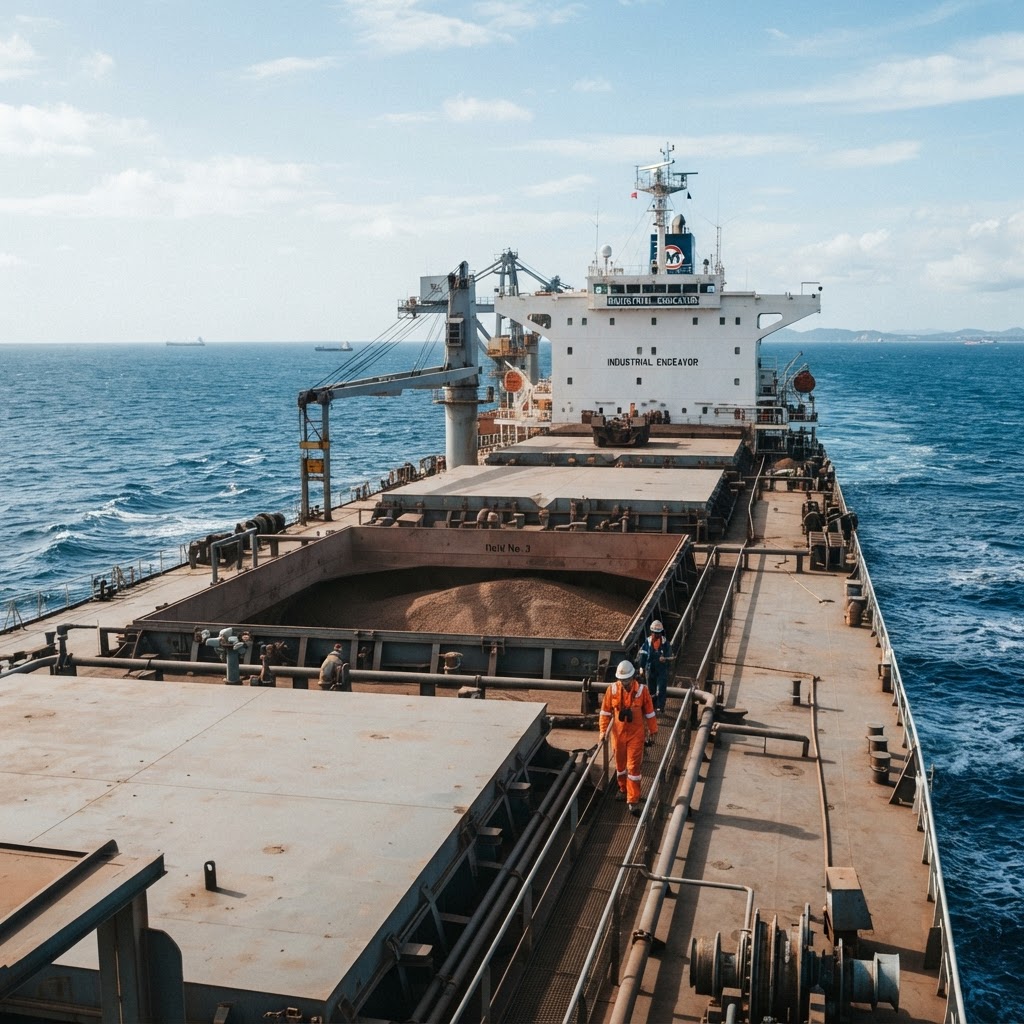
How to Monitor Coal Cargo Hazards: MCA Oral Exam Guide for OOW and Chief Mate
Direct Answer: What to Monitor When Carrying Coal
When carrying coal as a bulk cargo, you must strictly monitor the levels of Carbon Monoxide (CO), Methane (CH4), and Oxygen (O2). These measurements are critical as mandated by the International Maritime Solid Bulk Cargoes (IMSBC) Code. Monitoring these specific gases allows the vessel's crew to identify early signs of spontaneous combustion and the buildup of explosive atmospheres within the cargo holds.
Why This Matters for Your MCA Oral Exam
For an Officer of the Watch (OOW) or a Chief Mate candidate, the carriage of coal is a high-frequency topic during an MCA oral exam. Examiners prioritize this because coal is considered a cargo with 'Properties of Hazardous Materials' (Group A and B).
If you are aspiring to serve on ships over 3000GT or pursuing an Unlimited CoC, the examiner expects you to demonstrate a deep understanding of the IMSBC Code. They are not just looking for you to memorize the three gases; they want you to understand the consequences of failing to monitor them and the practical actions taken if these levels change.
The Three Critical Gases: A Breakdown
1. Carbon Monoxide (CO)
Carbon Monoxide is the primary indicator of spontaneous combustion or a deep-seated fire within the coal stow. As coal oxidizes, it releases CO. An increase in CO levels is the most reliable early warning signal that the cargo is heating up.
2. Methane (CH4)
Coal can emit methane, especially in newly mined or 'gassy' coal. Methane is highly flammable and explosive when mixed with air in concentrations between 5% and 15%. Monitoring CH4 ensures that the atmosphere in the hold remains below the Lower Explosive Limit (LEL).
3. Oxygen (O2)
Monitoring O2 is essential for two reasons. Firstly, it tells you if the hold is properly sealed (if you are employing a nitrogen inerting system). Secondly, it helps determine the potential for combustion. A rapid drop in O2 concentration, combined with high CO, is a classic indicator that active oxidation or combustion is consuming the oxygen in the hold.
Practical Application: The Chief Mate's Responsibility
During your Chief Mate oral, you may be asked how you would practically implement this monitoring.
- Sampling Procedure: Use the ship's fixed gas sampling system or portable instruments as per the IMSBC schedule for coal.
- Regularity: Sampling must be carried out at regular, consistent intervals as determined by the vessel’s Safety Management System (SMS) and the specific coal grade's characteristics.
- Reporting: All results must be logged in a dedicated Cargo Logbook. Any abnormal trend must be immediately reported to the Master.
Common Pitfalls and Examiner 'Traps'
Many candidates make the mistake of focusing only on the gases and forgetting the human element or the ship's safety equipment.
Common Exam Pitfalls:
- Forgetting the Surface Temperature: While gas monitoring is vital, do not forget to mention checking the temperature of the cargo surface and the ship’s structure (bulkheads) if heating is suspected.
- Ignorance of the IMSBC Code: If you fail to mention the IMSBC Code by name, you immediately lose credibility. Always frame your answer within the context of the Code.
- Incomplete Emergency Response: If the examiner asks, 'What if levels are critical?', do not just say 'monitor more often.' You must mention sealing the holds, checking for hot spots, and if necessary, consulting with the owners/charterers and preparing for emergency fire-fighting procedures.
Essential Tips for the Oral Exam
- Be Systematic: When the examiner asks about coal, start by stating, 'I would refer to the IMSBC Code and the vessel’s Cargo Securing Manual.'
- Use Correct Terminology: Use terms like 'spontaneous combustion,' 'explosive atmosphere,' 'Lower Explosive Limit,' and 'cargo hold atmosphere.'
- Stay Calm: If you get a follow-up question on what to do if a fire breaks out, remember: never use water directly on burning coal if there is a risk of steam explosion or structural damage to the hold. Focus on sealing the hold to starve the fire of oxygen.
Conclusion
Mastering the monitoring of CO, CH4, and O2 is not just about passing your MCA oral exam; it is a fundamental requirement for the safety of your vessel and crew. Whether you are an Officer of the Watch or a Chief Mate, knowing these indicators under the IMSBC Code ensures you can handle the complexities of bulk cargo operations. Always remember to check your ship’s specific procedures and keep your gas detection equipment calibrated and ready for use.