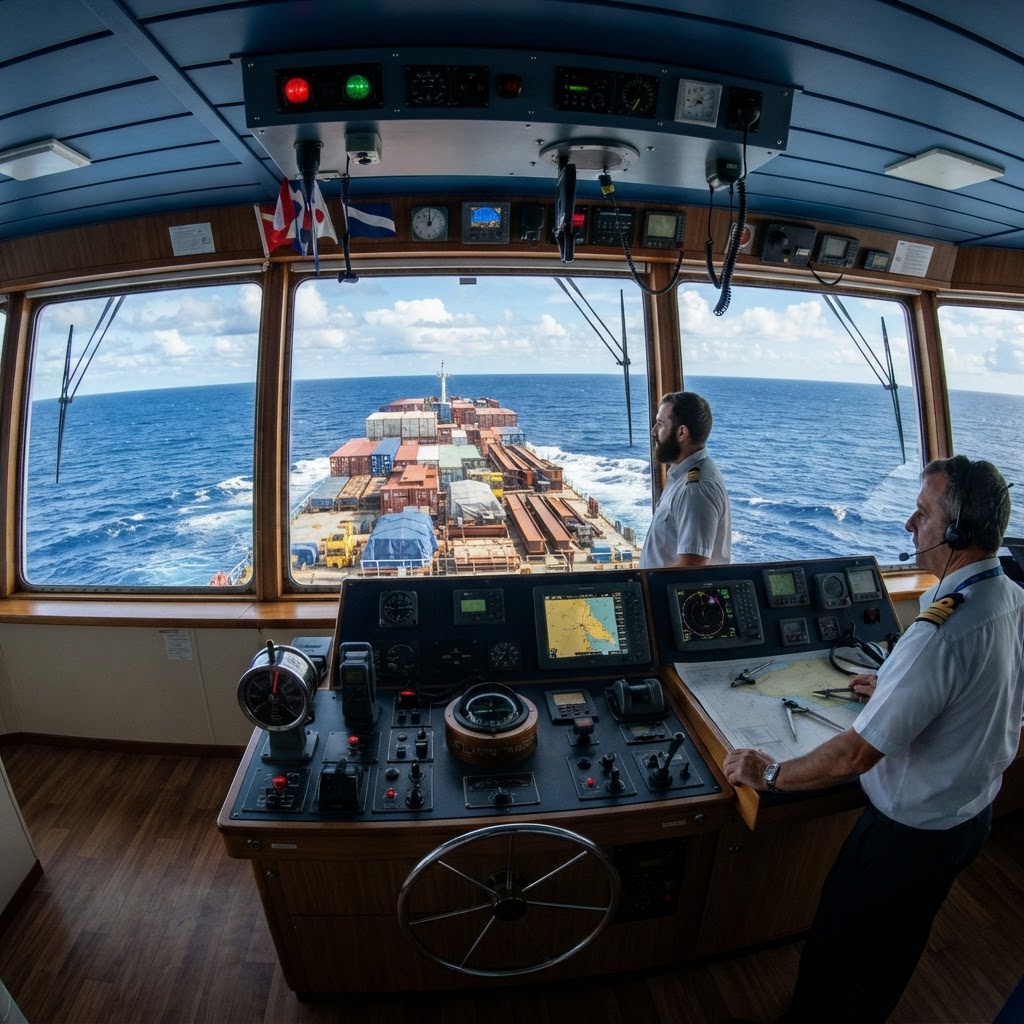
How to Prevent Cargo Hold Condensation: MCA Oral Exam Guide
The short answer
Condensation in a cargo hold is controlled mainly by ventilation, used according to the dew point rule: ventilate when the outside air's dew point is lower than the hold air's dew point, and stop when it is higher. Desiccants have a place inside containers and packaging, but they are not the main control in a ship's hold.
Ship's sweat and cargo sweat
- Ship's sweat forms on the ship's steel. It happens when the vessel sails from a warm region to a cold one: the hull and deckhead cool, and the warm, moist air in the hold condenses on them. Ventilating with cooler, drier outside air helps.
- Cargo sweat forms on the cargo. It happens when the vessel sails from a cold region to a warm one: the cargo stays cold, and warm, moist outside air condenses on it if it is let in. Ventilation is usually restricted or stopped.
The dew point rule
Take dry and wet bulb readings of the outside air and of the hold air (at the ventilator exhaust) and find their dew points.
- Outside dew point lower than hold dew point: ventilate.
- Outside dew point higher than hold dew point: don't.
For hygroscopic cargoes, where the hold dew point is hard to measure, the "three-degree rule" is often used: ventilate if the outside air is at least 3°C cooler than the cargo was when loaded.
Record every reading and decision in the ventilation log. It is your evidence if a cargo claim follows.
Hygroscopic and non-hygroscopic cargoes
Hygroscopic cargoes such as grain, rice, cocoa and timber hold moisture and can give it off or absorb it. Non-hygroscopic cargoes such as steel and machinery don't, but sweat on their surfaces can still damage them.
Where desiccants fit
Desiccant bags are used mainly inside containers and packaging, where ventilation is not possible. They support moisture control; they don't replace ventilation in a hold.
What the examiner wants to hear
- Ventilation and the dew point rule, by name.
- The difference between ship's sweat and cargo sweat, and which voyage direction causes each.
- Keeping a ventilation log.
- Hold preparation: clean, dry, and hatch covers weathertight.