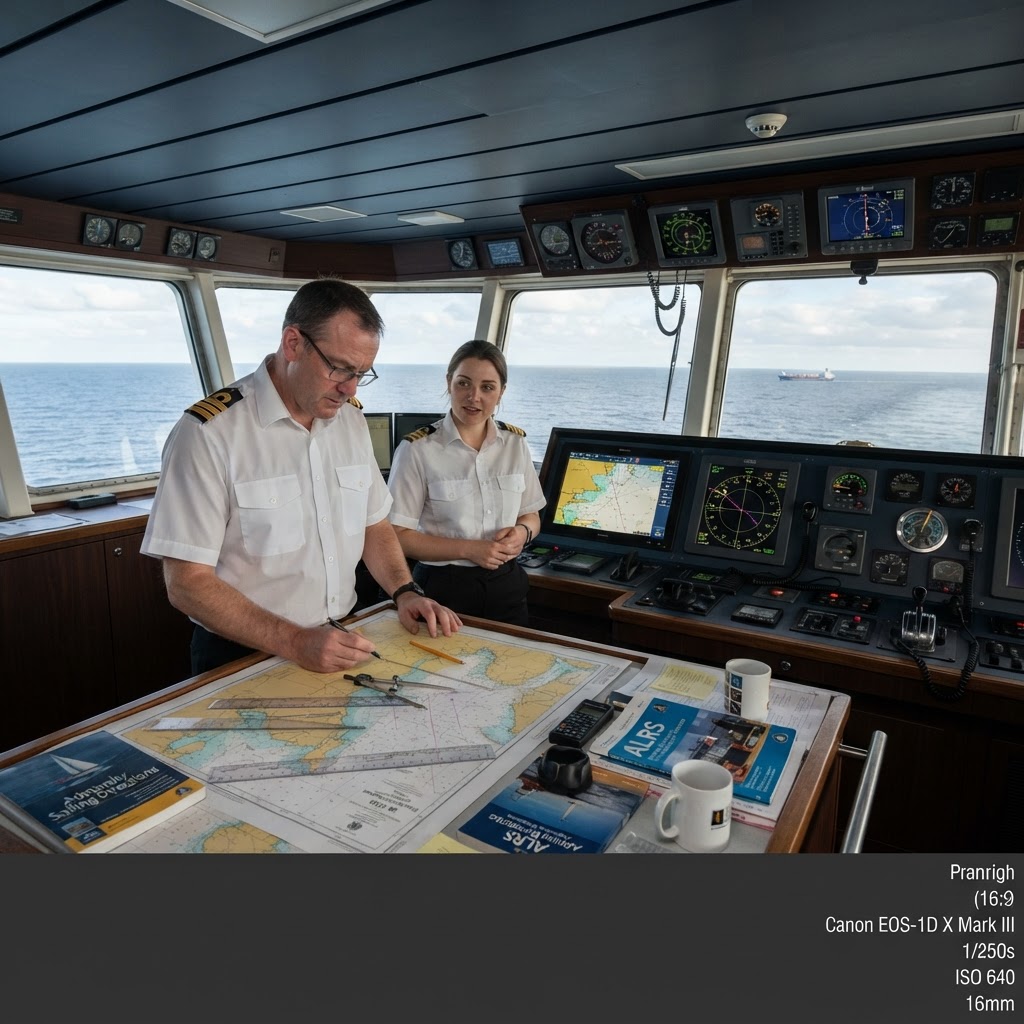
What Should You Do If You Find a Navigational Chart Discrepancy? MCA Oral Exam Guide
Direct Answer to the Examiner
If you discover a discrepancy in the vessel’s navigational charts during a passage, the immediate and mandatory action is to report the issue to the Master and the relevant authorities, then utilize the most updated electronic navigation information available. As a Chief Mate or an OOW, your priority is to ensure the safety of the vessel; you must not rely on faulty or outdated information. Use the latest Notices to Mariners (NMs), temporary and preliminary notices, and the vessel's ECDIS (Electronic Chart Display and Information System) to cross-reference and verify all navigational data.
Why This Matters in Your MCA Oral Exam
When an examiner asks this during your OOW oral exam or Chief Mate assessment, they are not just checking if you can read a chart. They are testing your Safety Management System (SMS) mindset. The MCA wants to see if you can demonstrate professional judgment, regulatory compliance, and a commitment to bridge resource management.
If you encounter a conflict—perhaps a buoy position has changed, or a new wreck is not marked on your paper chart—the examiner is looking for a candidate who stops the current action to investigate, informs the decision-maker (the Master), and provides a safe alternative. For those operating vessels over 3000GT or on Unlimited voyages, relying on a known discrepancy is considered negligence and a major failure of passage planning.
The Professional Response: A Step-by-Step Approach
1. Immediate Safety Mitigation
If you are on watch, your first action is to ensure the vessel is in safe water. If the discrepancy involves your current position or intended track, adjust the ship's heading to a safe distance from hazards. Do not wait for verification if there is an immediate risk of grounding or collision.
2. Verify with Multiple Sources
Do not rely on one source of data. Use the following to verify the discrepancy:
- ECDIS/ENCs: Check if the electronic charts are up-to-date with the latest Admiralty Information Overlay (AIO).
- Notices to Mariners: Consult the latest weekly NMs and the annual summary.
- Navtex/SafetyNET: Look for recent navigational warnings that may have been missed or not yet plotted.
- GPS/GNSS: Cross-reference your position with secondary positioning systems.
3. Report to the Master
Inform the Master immediately. This is not a request for permission; it is a notification of a safety-critical finding. The Master must be involved in any decision to alter a pre-planned route or deviate from the passage plan.
4. Regulatory Reporting
If the error suggests a fundamental fault in the official charting, it must be reported to the appropriate Hydrographic Office. This is part of your duty as a professional mariner to assist in the correction of global navigational data.
Common Pitfalls and Examiner Traps
Candidates often fail this question by over-complicating or under-reacting. Avoid these common mistakes:
- "I would just change the course immediately": While safety is paramount, you must inform the Master. Don't make unilateral decisions that alter the passage plan without communication.
- "I would ignore it if the GPS says we are fine": This is a critical error. ECDIS/GPS are tools, not gods. If the chart says there is a hazard and the GPS says you are clear, you must treat the hazard as real until proven otherwise.
- "I would wait until the end of my watch": Never defer a safety-critical discovery. The examiner wants to see urgency.
The Role of the Chief Mate
For the Chief Mate oral exam, the expectations are higher. You are likely the Navigation Officer responsible for the upkeep of charts and publications. The examiner will test your knowledge of the Bridge Procedures Guide (BPG) and the SOLAS Chapter V requirements regarding the carriage of nautical charts. You should be familiar with the process of updating electronic charts via the internet or weekly CD-ROM updates and ensuring the Master is aware of the status of these corrections.
Key Exam Tips for Success
- Mention the SMS: Always state that you will follow the company's established procedures for reporting navigational hazards.
- Use Correct Terminology: Reference 'Correction of Charts,' 'Notices to Mariners,' 'ECDIS Discrepancies,' and 'Passage Planning.'
- Maintain Calm: The examiner wants to see that you remain composed. State your actions clearly and logically.
- Bridge Resource Management (BRM): Mention that you would involve the watch team in verifying the discrepancy to ensure no information is missed.
Conclusion
Dealing with a chart discrepancy is a fundamental skill for any officer aspiring to higher certification. By prioritizing communication with the Master, utilizing secondary sources of data, and strictly adhering to the company’s safety procedures, you prove that you are ready for the responsibilities of the Officer of the Watch. Remember: when in doubt, keep the vessel in safe water, inform the Master, and use the most reliable information available. Proper preparation and a firm grasp of the regulatory requirements are your best tools for passing your MCA oral exam with confidence.