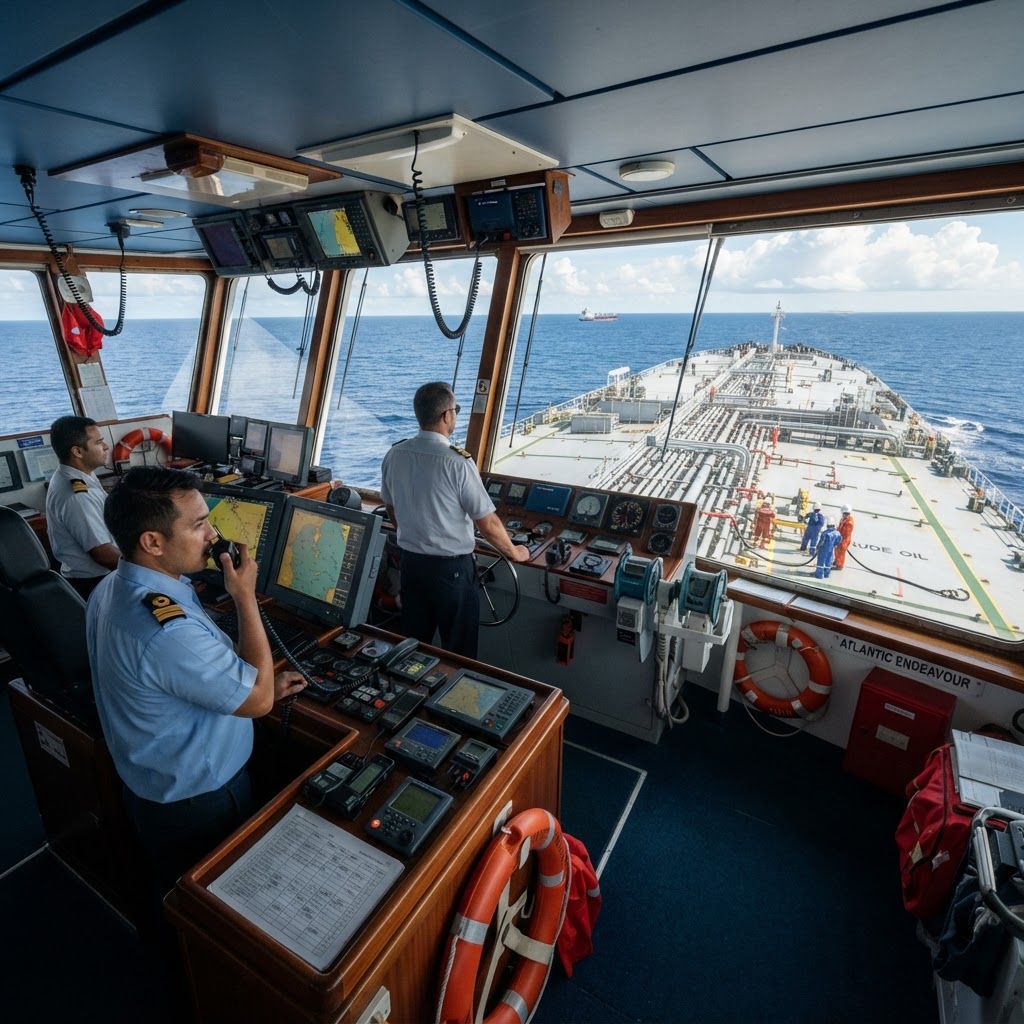
Ship-Shore Safety Checklist: What Must Be Confirmed Before Cargo Operations? MCA Oral Exam Guide
The Priority of Mooring Arrangements
When preparing for a ship-shore safety checklist, the most critical item that must be confirmed before any cargo operations commence is the verification of mooring arrangements. For any candidate sitting their OOW oral exam or Chief Mate assessment, understanding that cargo operations cannot begin until the vessel is safely and securely moored is fundamental to passing the examination.
Why Examiners Focus on Mooring Verification
The MCA oral exam for Unlimited or 3000GT licenses is designed to test your situational awareness and your commitment to safety protocols. When an examiner asks this question, they are testing your understanding of the Ship-Shore Safety Checklist (SSSCL), often referred to as the ISGOTT (International Safety Guide for Oil Tankers and Terminals) checklist.
Confirming that the vessel is adequately moored is the first line of defense against a catastrophic cargo spill. If a vessel breaks free during loading or discharging, it can cause severe damage to the loading arms or hoses, resulting in environmental pollution, fire, and potential loss of life. Examiners are looking for a candidate who treats this not as a box-ticking exercise, but as a critical safety barrier.
The Technical Requirements for Secure Mooring
When you are questioned on this during your oral exam, do not simply say "check the lines." You must demonstrate a professional understanding of the following:
- Line Tension: All mooring lines must be under sufficient, uniform tension. A mix of synthetic and wire ropes should be avoided as they have different elasticity characteristics.
- Shore Connection: The terminal representative and the Chief Officer must agree that the lines are configured correctly to handle the ship’s anticipated movement due to tide, cargo weight shifts, and passing traffic.
- Personnel Monitoring: Even after the initial confirmation, you must emphasize that regular checks are required throughout the operation. Wind, current, and tidal shifts can slacken or over-stress lines.
- Emergency Release: The crew must be prepared to release lines or handle emergency disconnects if the mooring configuration becomes compromised.
Common Pitfalls in the Oral Exam
Many candidates fail to distinguish between the initial check and the ongoing responsibility. If an examiner asks, "What is the most critical item to confirm?", they want to hear that the mooring status is a dynamic safety factor.
Common mistakes include:
- Overlooking the Terminal's role: Always remember that the SSSCL is a joint effort. You must mention that both the Chief Officer and the Terminal Representative must confirm these arrangements.
- Failing to mention environmental factors: A good Officer of the Watch knows that weather reports, specifically wind speeds and tidal flow, dictate whether the current mooring arrangement remains safe.
- Lack of communication: Emphasize that mooring status must be relayed to the bridge and the cargo control room (CCR) at regular intervals.
Practical Example: A Scenario-Based Response
In your MCA oral, the examiner might present a scenario: "You are the OOW on a 50,000 DWT tanker. A squall is approaching. What is your concern regarding the cargo operation?"
Your answer should be structured as follows:
- Acknowledge the immediate safety risk: Identify that the mooring arrangements could be compromised by high winds.
- Identify the checklist item: "I would immediately refer to the Ship-Shore Safety Checklist and verify that our mooring lines are properly tended."
- Action: "I would ensure that the mooring gang is on standby, inform the Cargo Control Room, and if necessary, request the terminal to suspend cargo operations until the environmental conditions stabilize."
Key Takeaways for Your Examination
Success in your OOW oral exam comes down to demonstrating that you prioritize safety systems over speed of operations.
- The SSSCL is mandatory: Never treat the checklist as a formality. Every item has a purpose, and mooring is the foundation.
- Communication is key: A successful tanker operation relies on the synergy between the ship’s deck team, the bridge, and the terminal.
- Stay Vigilant: As an Officer of the Watch, your responsibility does not end when the pumps start; it is a continuous cycle of monitoring the ship’s position relative to the berth.
By focusing on the integrity of mooring arrangements as the cornerstone of the pre-cargo safety phase, you demonstrate to the examiner that you possess the professional maturity required for a Chief Mate or OOW role in the global maritime industry.