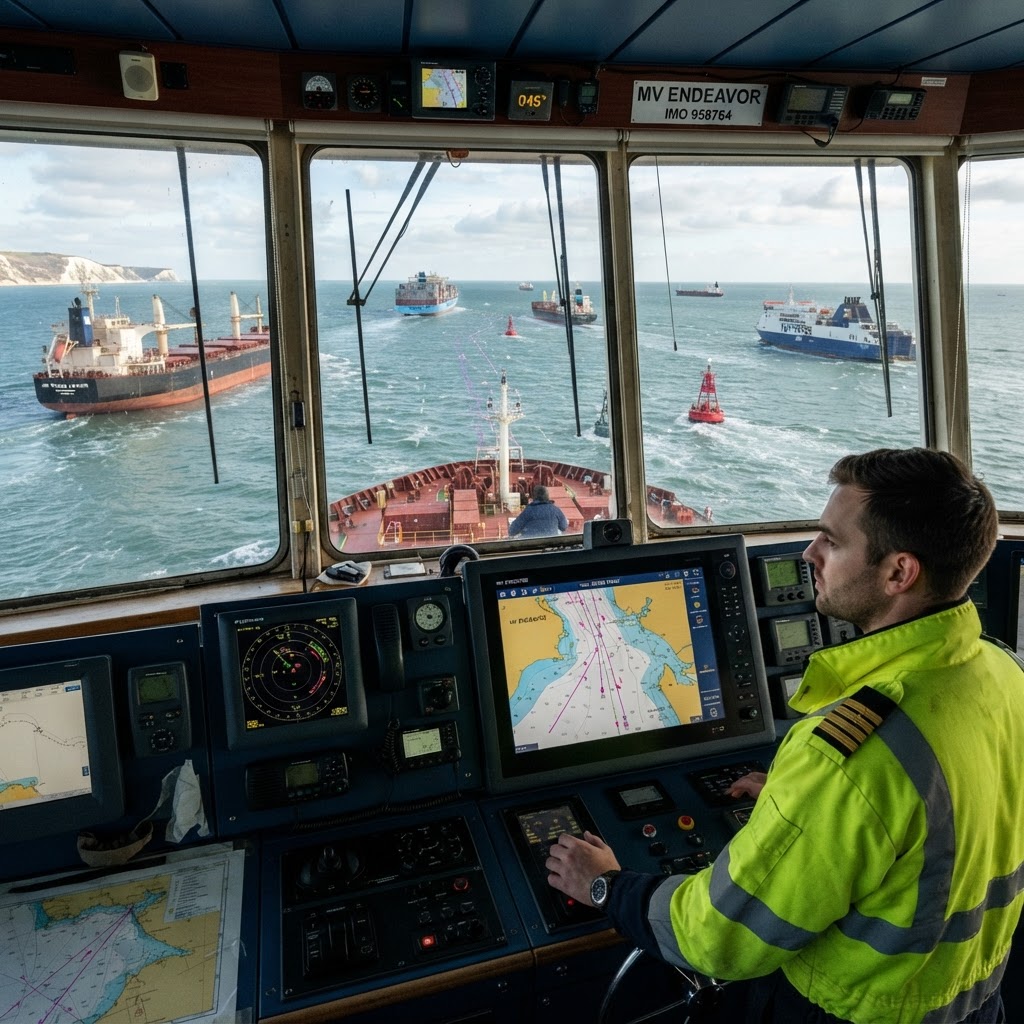
TSS Navigation and COLREGS: Does a Fishing Vessel Have Right of Way in a Traffic Separation Scheme?
Understanding Rules 8, 10 and 18 in the MCA Oral Exam
When sitting your OOW oral exam or preparing for your Chief Mate certification, you must be prepared for the examiner to test how the rules of the International Regulations for Preventing Collisions at Sea (COLREGS) fit together. A classic "trap" question involves navigating a Traffic Separation Scheme (TSS) while encountering a fishing vessel. To answer directly: the fishing vessel must not impede your passage (Rule 10(i)), but once risk of collision exists you are still bound by the steering and sailing rules — so as a power-driven vessel you keep out of the way of a vessel engaged in fishing (Rules 8(f)(iii) and 18). Being in the lane of a TSS like Portland Bill does not give you right of way.
Why This Question Matters for Your Oral Examination
The examiner is not just checking if you know the rules by rote; they are evaluating your decision-making process as an Officer of the Watch. Many candidates believe that because they are in the "lane" of a TSS, they have a superior right of way that overrides other vessels. This is a dangerous misconception. The examiner wants to see that you understand the difference between a duty not to impede and a duty to keep out of the way.
Breaking Down the Interaction: Rule 10(i), Rule 8(f) and Rule 18
Rule 10(i) states that a vessel engaged in fishing shall not impede the passage of any vessel following a traffic lane. (Rule 10(j) puts the same duty on vessels of less than 20 metres in length and sailing vessels.) That duty sits with the fishing vessel and starts early: under Rule 8(f)(i) she must take early action to leave enough sea room for your safe passage, and under Rule 8(f)(ii) she is not relieved of that obligation if she gets close to you.
But "not impede" is not the same as "stand on". Rule 8(f)(iii) says a vessel whose passage is not to be impeded remains fully obliged to comply with the steering and sailing rules when the two vessels are approaching so as to involve risk of collision.
Under Rule 18, a power-driven vessel underway shall keep out of the way of:
- A vessel not under command;
- A vessel restricted in her ability to manoeuvre;
- A vessel engaged in fishing;
- A sailing vessel.
Rule 18 opens with "Except where Rules 9, 10 and 13 otherwise require" — and Rule 10(i) is why the fishing vessel should never have let the situation develop. Once risk of collision exists, though, you are the vessel that keeps out of the way. Your duty as the OOW is to take early and substantial action to keep well clear, just as you would in open water — and expect the examiner to ask what the fishing vessel should have done.
Common Pitfalls in the MCA Oral Exam
- The "TSS Supremacy" Fallacy: Never tell an examiner that you have right of way because you are in a lane. The lane provides navigational order, not an absolute right of way.
- Ignoring the Fishing Vessel's Status: If the vessel is displaying the correct day shape (two cones with their points together), or at night the lights for fishing or trawling, she is engaged in fishing. Acknowledge the signals immediately.
- Forgetting Rule 10(i): If you only quote Rule 18, the examiner will ask what the fishing vessel's obligations are. Know Rules 10(i) and 8(f) by number.
- Late Action: Examiners look for "early and substantial" action. If you wait until you are in close quarters before altering course, you have already lost the examiner.
Practical Action Plan for the OOW
When you observe this situation on your radar or via visual lookout, follow these steps to demonstrate your competency:
- Assess the Situation: Use ARPA to determine the fishing vessel's aspect and movement. Confirm the day shapes or lights via binoculars, and look for any indication of the direction of outlying gear.
- Early Alteration: Alter course early and boldly to keep well clear, normally passing astern of a trawler and well clear of any gear.
- Compliance: State clearly to the examiner: "The fishing vessel should not impede me under Rule 10(i). But now that risk of collision exists, Rules 8(f)(iii) and 18 apply and I keep out of her way."
- Communicate: If the situation becomes ambiguous, use sound signals (at least five short and rapid blasts if in doubt, Rule 34(d)). VHF can help, but it is not a replacement for action under the rules.
Exam Tips for Success
- Know Where Rule 10 Sits: Rule 10 is part of the steering and sailing rules (Part B, Section I), not something separate from them. "Not to impede" (Rules 8(f), 9 and 10) and "keep out of the way" (Rules 16 and 18) are different duties. Examiners want to hear you explain the difference.
- Stay Calm: The examiner might challenge you by saying, "But the TSS is busy, and I need to stay in the lane!" Remain firm. Maintaining the lane is secondary to avoiding a collision, and Rule 10 allows you to deviate to avoid immediate danger.
- Use Correct Terminology: Always refer to the vessel as a "vessel engaged in fishing" rather than just "a fishing boat." The terminology matters.
Conclusion
Navigating a TSS is a routine task for an Officer of the Watch, but it requires a clear understanding of how different rules interact. The encounter with a fishing vessel in a lane is a litmus test for how well you understand Rules 10(i), 8(f) and 18 together. By putting collision avoidance ahead of the perceived convenience of the TSS lane, you demonstrate the professional judgement expected of a certified Chief Mate.
Updated 25 October 2026: corrected to include Rule 10(i) and Rule 8(f), and to clarify that Rule 10 is part of the steering and sailing rules.