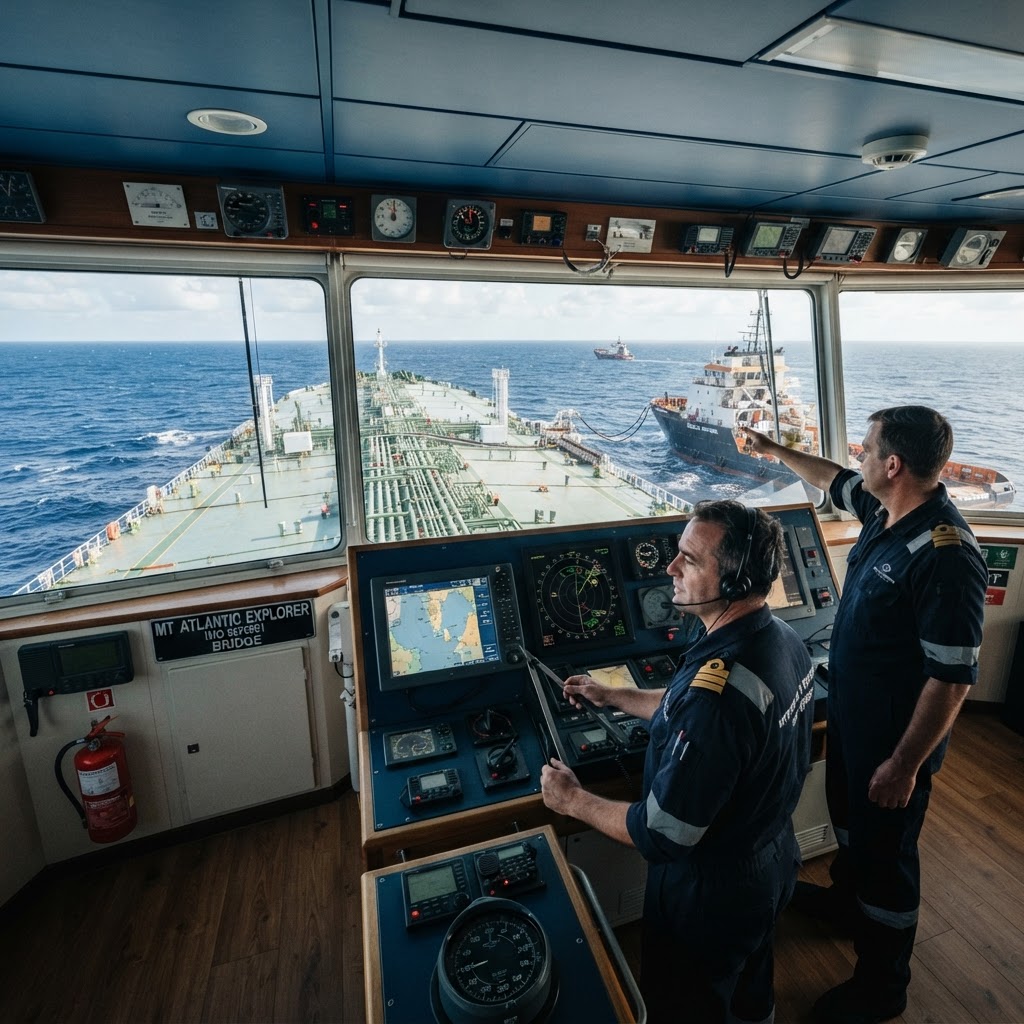
What Does a Volume Correction Factor (VCF) Do? MCA Oral Exam Guide for Tankers
Understanding the Role of Volume Correction Factor in Cargo Calculations
A Volume Correction Factor (VCF) is a multiplier used in liquid cargo operations to account for temperature changes affecting the volume of a liquid. Because liquids expand when heated and contract when cooled, the VCF acts as a vital correction tool, allowing an officer to convert the observed volume at the measured temperature into the standard volume at a reference temperature, usually 15°C.
For any candidate sitting their OOW oral exam or progressing to Chief Mate for Unlimited tonnage vessels, understanding VCF is not merely a technicality; it is a fundamental pillar of tanker safety and commercial integrity. Examiners often probe this topic to ensure you understand that volume is not a static quantity in maritime logistics.
Why Examiners Focus on Temperature Corrections
During an MCA oral exam, the examiner is looking for more than just a dictionary definition. They want to see that you appreciate the physics of cargo expansion. Whether you are serving on a product tanker or a chemical carrier, your duties as an Officer of the Watch involve precise record-keeping. If you fail to apply the correct VCF, you are failing to report the accurate quantity of cargo being transferred. This can lead to:
- Shore-ship discrepancies: Disagreements between the terminal's calculations and the ship's figures.
- Overfilling risks: Failing to account for thermal expansion can lead to tank overpressurization.
- Cargo claims: Financial losses due to inaccurate bills of lading.
The Technical Mechanism: How VCF Works
Liquids possess a coefficient of expansion. When the cargo temperature increases, the molecules move more vigorously and push apart, resulting in a higher total volume for the same mass. Conversely, when the temperature drops, the volume decreases.
The calculation follows a logical progression:
- Obtain Observed Volume: Taken from the tank sounding or ullage gauge.
- Measure Temperature: Using a calibrated temperature probe at various levels within the tank.
- Identify Product Density: Use the cargo’s API gravity or density at 15°C.
- Apply VCF: Use the ASTM Petroleum Measurement Tables to select the appropriate factor based on the temperature and the product type.
- Calculate Standard Volume: Observed Volume × VCF = Volume at 15°C.
Practical Example: A Cargo Scenario
You are on a vessel of 3000GT or above, loading a refined product. You measure an observed volume of 10,000 cubic meters at 30°C. Since the standard reference temperature is 15°C, the liquid is currently expanded. You must apply a VCF (which will be less than 1.0) to normalize this figure to 15°C. By applying this factor, you ensure that the "Standard Volume" you record reflects the actual amount of mass present, independent of current weather conditions or tank heating.
Common Pitfalls and Examiner Traps
When sitting your MCA oral, candidates often stumble by over-complicating the math or ignoring the "why." Here are common errors to avoid:
- Forgetting the Reference Temperature: Always clarify that the standard is 15°C. Some candidates confuse this with Fahrenheit or Kelvin measurements.
- Ignoring the Tanker Safety Guide: Examiners love to link cargo calculations to the International Safety Guide for Oil Tankers and Terminals (ISGOTT). Always mention that you refer to the cargo manual and the specific VCF tables provided by the terminal/charterer.
- Confusing VCF with Weight: Remind the examiner that VCF adjusts volume. To get the final mass, you still need to apply the density correction (Weight Correction Factor/WCF), though in modern practice, these are often integrated into computer systems like the loading calculator.
Exam Tips for Success
- Use Professional Terminology: Refer to the cargo as being "corrected to standard reference conditions."
- Mention Digital Tools: Acknowledge that while you understand the manual lookup process, most modern tankers use automated tank gauging (ATG) systems that apply the VCF in real-time. Examiners appreciate that you know how the systems work, even if they are automated.
- Safety First: Always link the calculation back to the safety of the vessel. If you don't calculate the thermal expansion correctly, you could be in danger of overflowing a tank during a loading evolution.
Conclusion
Mastering the Volume Correction Factor is essential for any aspiring Chief Mate or Officer of the Watch. It demonstrates a sound grasp of liquid cargo behavior and ensures that you can handle the commercial and safety responsibilities inherent in tanker operations. Remember: the VCF is your primary defense against inaccurate cargo reporting and ensures that the vessel operates within safe parameters regardless of ambient temperature fluctuations. Stay focused on the fundamentals, reference your documentation, and demonstrate your awareness of the "why" behind the calculation.