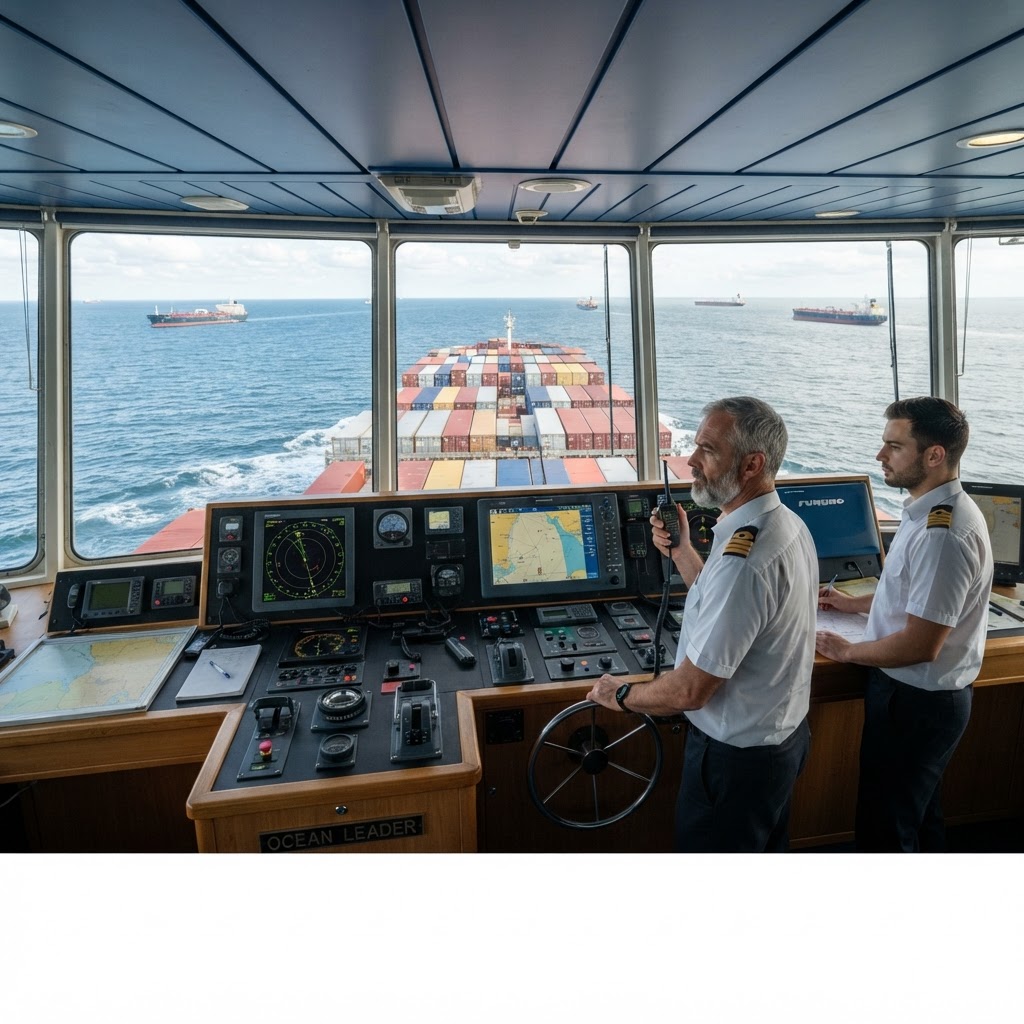
What Is a Performance Clause in a Charter Party? MCA Oral Exam Guide for Officers
Understanding the Performance Clause in Maritime Law
In the context of a charter party, the specific clause that dictates an owner’s obligation to maintain a certain speed and fuel consumption level is known as the Performance Clause. During your MCA oral exam, an examiner may present a scenario where the ship has arrived late to a discharge port or burned excess bunkers. Understanding this clause is vital for any Officer of the Watch or Chief Mate preparing for their Unlimited or 3000GT certification.
Why the Performance Clause Matters for Your Oral Exam
The MCA examiner is not just checking if you know the name of the clause; they are testing your commercial awareness. When you sit for your OOW oral exam or Chief Mate assessment, the examiner wants to see that you understand the link between technical ship operation and the financial liability of the shipowner. If a vessel fails to maintain its warranted speed, the shipowner may be held liable for the charterer's financial losses, leading to a 'speed and consumption claim.'
Breakdown of a Typical Performance Clause
A standard Performance Clause usually includes the following parameters:
- Warranted Speed: The vessel is expected to maintain a specific speed (e.g., 14 knots) under defined weather conditions (e.g., Beaufort Scale 4 and a specific Douglas Sea State).
- Bunker Consumption: The corresponding daily fuel consumption for that speed.
- Weather Limitations: Crucially, the clause often states that the vessel is not responsible for speed loss caused by 'heavy weather'—defined by specific wind speeds or wave heights.
Common Pitfalls and Examiner Traps
When answering this question during your MCA oral, avoid simply memorizing a definition. Examiners love to challenge candidates with follow-up questions:
- 'What happens if the vessel meets a current?' You should be able to explain that performance is usually measured as 'speed through the water' rather than 'speed over the ground,' unless explicitly stated otherwise in the charter party.
- 'Who is responsible for collecting data?' The Officer of the Watch is responsible for accurate noon reports. If you under-report speed or exaggerate consumption, you are directly impacting the legal standing of the shipowner.
- 'Does the clause apply in restricted waters?' Usually, the performance warranty applies to 'good weather' conditions on the high seas. You must clarify that the clause is rarely applicable during maneuvers, canal transits, or in congested restricted waters.
Practical Application: The Role of the OOW
For a candidate aiming for an Unlimited certificate, your role is to ensure the integrity of the data. The Performance Clause relies entirely on the accuracy of the Noon Report. If you are the OOW, you must ensure:
- The distance run is accurately calculated from log or GPS.
- Bunker readings are taken at consistent times.
- Weather observations are logged objectively, as these records serve as evidence in a legal dispute involving the Performance Clause.
Exam Strategy: How to Impress the Examiner
When asked about this in your MCA oral exam, follow this structure:
- Define the clause: State clearly that it is the Performance Clause which dictates the vessel's speed and consumption warranties.
- Contextualize the warranty: Mention that it is subject to 'good weather' conditions (the 'weather clause').
- Link to logs: Emphasize that the Deck Log and Noon Report are legal documents used to prove or disprove performance claims.
- Maintain professionalism: Use terms like 'warranted speed,' 'bunker consumption,' and 'weather parameters.'
Conclusion: Key Takeaways
The Performance Clause is the primary commercial mechanism for ensuring a ship meets the operational expectations set by the shipowner. As an Officer of the Watch, your contribution—through precise log-keeping and objective reporting—is the first line of defense against costly commercial disputes. Master the definition, understand the weather exceptions, and always link the clause to the data recorded in the deck log.