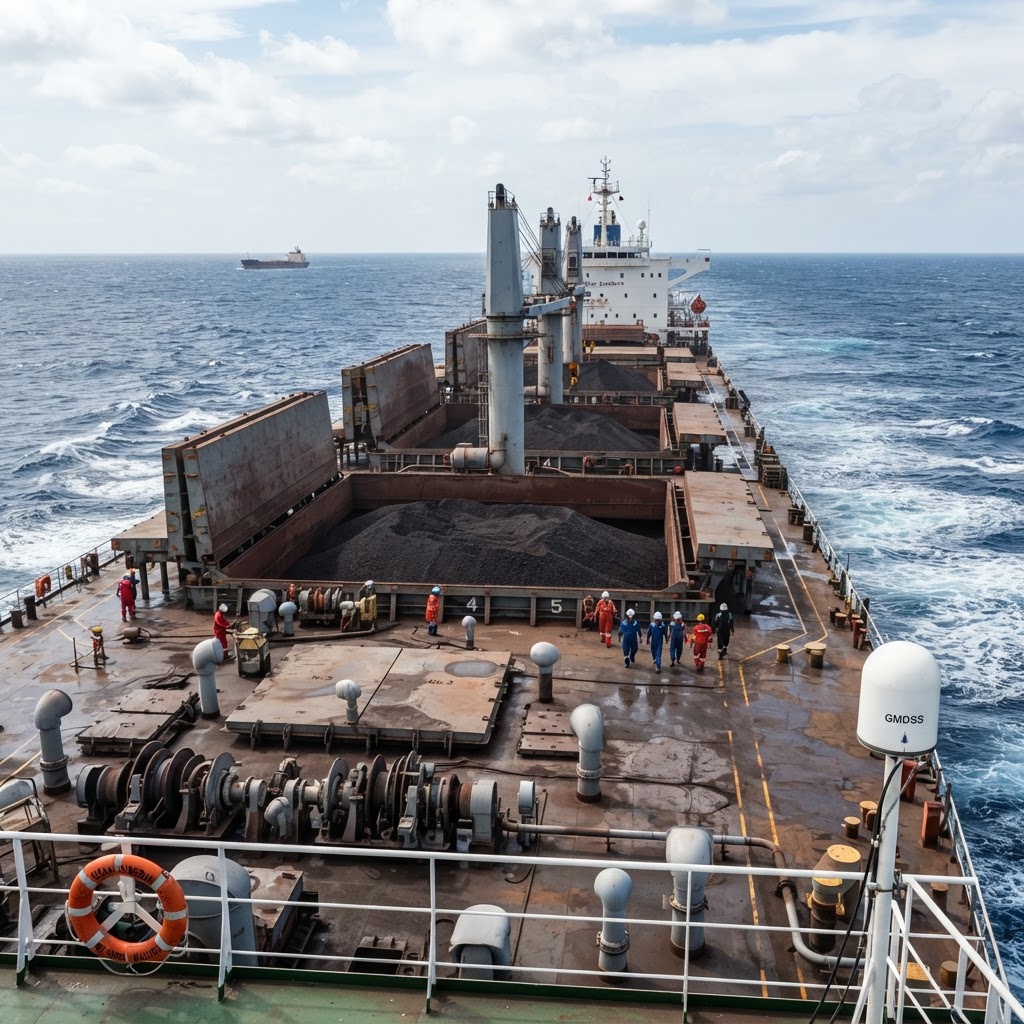
What is the Primary Purpose of the IMSBC Code? MCA Oral Exam Guide for Officers
Understanding the IMSBC Code for Your MCA Oral Examination
When sitting your OOW oral exam or progressing toward your Chief Mate ticket, the examiner will inevitably test your knowledge of international maritime regulations. One fundamental question you must be prepared to answer is: "What is the primary purpose of the IMSBC Code?"
The short, direct answer that the examiner expects is: The primary purpose of the IMSBC Code (International Maritime Solid Bulk Cargoes Code) is to facilitate the safe stowage and shipment of solid bulk cargoes by providing information on the risks associated with such cargoes and the procedures to be adopted. In essence, it is there to ensure the safe transport of solid bulk cargoes through standardized global practices.
Why This Question Matters for the OOW Oral Exam
As an Officer of the Watch on a vessel exceeding 3000GT (Unlimited), you will encounter various bulk cargoes, ranging from grain and coal to mineral concentrates and industrial waste. The examiner is not looking for a recitation of every schedule in the book; they are looking for your ability to identify hazards and apply the code to prevent accidents.
Failure to properly manage bulk cargo is a leading cause of ship loss, often due to cargo liquefaction, shifting, or structural damage. By asking this question, the surveyor is gauging whether you respect the risks inherent in bulk shipping and understand that the IMSBC Code is your primary manual for mitigation.
The Core Objectives of the IMSBC Code
To pass your MCA oral assessment, you should elaborate on the purpose by highlighting these three key objectives:
- Risk Identification: Categorizing cargoes into Groups A (cargoes which may liquefy), B (cargoes which possess a chemical hazard), and C (cargoes which are neither liable to liquefy nor possess chemical hazards).
- Safe Stowage and Segregation: Providing clear guidelines on how to stow specific commodities to ensure the ship's stability is not compromised and that incompatible materials are kept apart.
- Standardization of Procedures: Ensuring that shippers, masters, and terminals speak the same language regarding cargo declarations, moisture content, and testing protocols.
Practical Application: Group Classification
When asked about the purpose, follow up with the practical application. Explain that the code mandates the shipper to provide a Cargo Declaration before loading.
- Group A: Cargoes like iron ore fines or nickel ore. These are the most dangerous because they may appear dry but contain enough moisture to liquefy under ship vibrations, causing a sudden loss of stability.
- Group B: Cargoes with chemical hazards, such as coal (which may emit methane or self-heat) or direct-reduced iron.
- Group C: Inert cargoes like heavy scrap metal, which are stable but can still threaten structural integrity if not loaded according to an approved plan.
Common Pitfalls and Examiner Tips
Many candidates make the mistake of confusing the IMSBC Code with the IMDG Code. While both deal with safety, the IMDG Code is specifically for packaged dangerous goods, whereas the IMSBC Code is exclusively for solid bulk cargoes.
Pro Tip for Chief Mate Candidates: If the examiner pushes for more detail, mention the Transportable Moisture Limit (TML) and Flow Moisture Point (FMP). Explaining that the Master must ensure the actual moisture content of the cargo is below the TML before loading is the hallmark of a high-scoring candidate. This demonstrates you aren't just memorizing definitions—you are thinking like a responsible Officer of the Watch.
Essential Documentation
Always mention the documentation required for compliance:
- Cargo Declaration: Provided by the shipper.
- Certificate of Test: Verifying moisture content.
- Loading Plan: Agreed upon between the Master and the Terminal Representative.
- IMSBC Code Manual: Stated as the primary reference onboard.
Conclusion
When you are asked about the purpose of the IMSBC Code, stay focused on the concept of safety through standardization. Whether you are an OOW or a Chief Mate, acknowledging that this code exists to identify risks and provide the necessary operational procedures to manage them shows the examiner you are ready for the responsibilities of a senior officer. Remember to link the code to your ship’s stability and the safety of the crew; these are the practical concerns that keep your ship safe at sea.