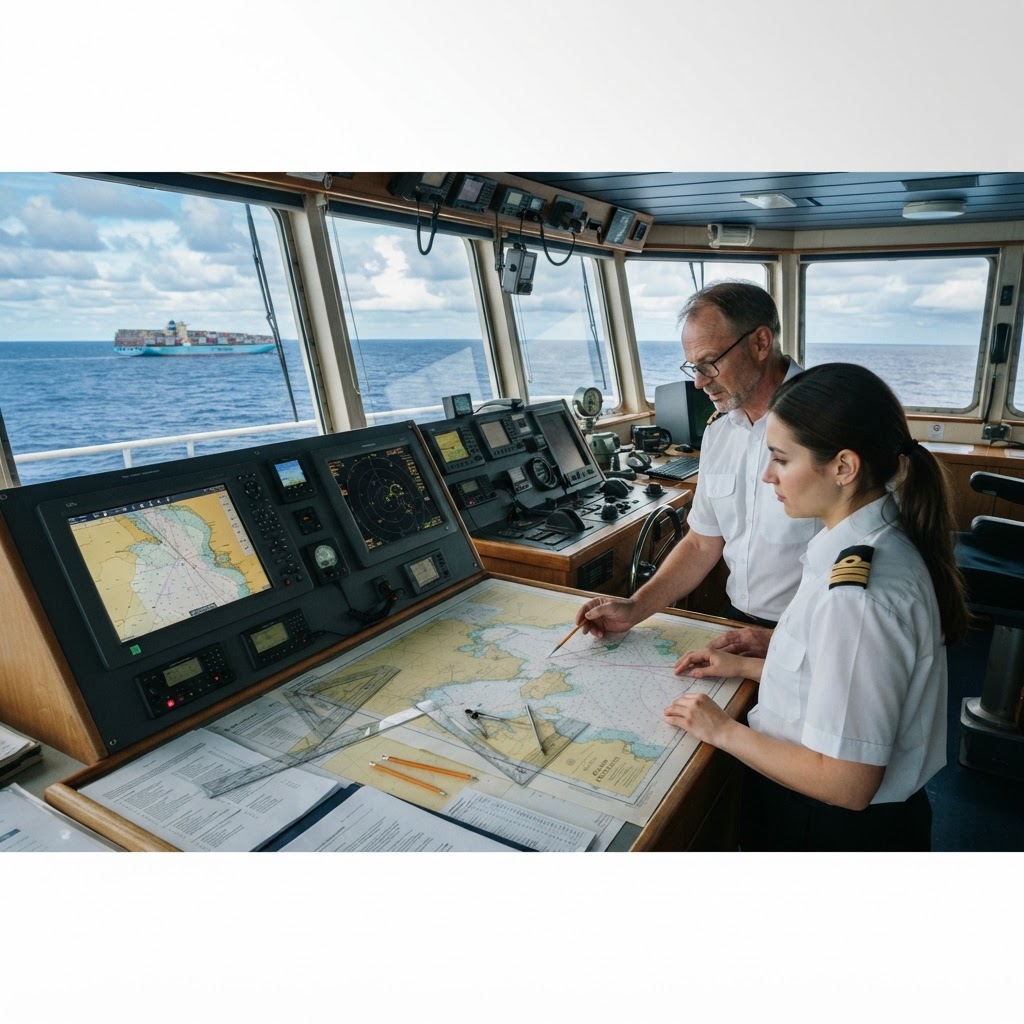
What Should a Chief Mate Do If a Navigational Hazard is Found After Voyage Plan Approval? MCA Oral Exam Guide
Direct Answer to the Examiner
If you are asked this during your Chief Mate or OOW oral exam, the examiner is testing your grasp of the dynamic nature of passage planning. The direct, correct answer is: You must immediately reassess the voyage plan and modify it if necessary. A voyage plan is not a static document; it is a living, breathing safety tool that must be updated whenever new information regarding navigational safety, weather, or vessel status becomes available.
Why This Question Appears in the MCA Oral Exam
The MCA oral examiner is not just looking for a textbook definition; they are testing your ability to exercise the authority vested in you as a deck officer. Under the ISM Code and STCW requirements, the passage plan must cover the journey from berth to berth. When a significant hazard—such as a newly reported wreck, an unexpected navigational warning, or a sudden change in sea state—is identified after the Master has approved the plan, the Chief Mate holds the primary responsibility for ensuring the bridge team remains aware and that the plan is adjusted to maintain the safety of the vessel.
This topic falls under the umbrella of Passage Planning and is critical for both Unlimited and 3000GT certification candidates. Failure to acknowledge the need for revision suggests a rigid mindset, which the examiner will view as a major safety oversight.
The Step-by-Step Procedure for Reassessment
When a hazard appears, your response must be systematic. Do not simply "hope for the best." Follow this logical flow:
- Immediate Situational Awareness: Verify the hazard. Is it a real navigational warning (Navarea/Navtex)? Confirm the position, extent, and implications for your current track.
- Master's Consultation: As the Chief Mate, you are the bridge manager. Inform the Master immediately. Safety management systems (SMS) require the Master to be aware of any deviations from the approved passage plan.
- Assess the Impact: Does the hazard lie on your planned track? What is the Under Keel Clearance (UKC) implication? Does this hazard force you into restricted waters or increase the risk of collision?
- Modify the Plan: Draft a new track or adjustment. Ensure this is marked clearly on the ECDIS or paper chart. Annotate the plan to show the "Why" and "When" of the change.
- Brief the Bridge Team: Ensure the Officer of the Watch on every watch is fully briefed on the change. The shift from the original plan to the revised plan is a moment of high risk for human error.
- Document Everything: Log the modification in the deck logbook and update the bridge folder to reflect the change for audit purposes.
Common Pitfalls for Candidates
- The "Ignore it" approach: Some candidates try to minimize the hazard to avoid "hassle." Never do this. If it is a significant hazard, it must be addressed.
- Failure to Communicate: A classic mistake is changing the track without updating the rest of the bridge team. If your OOW does not know the plan has changed, you are setting the vessel up for a grounding.
- Over-reliance on ECDIS: Remember that while ECDIS makes track adjustment easier, you must ensure the safety settings (safety contour/depth) are still appropriate for the new area you are maneuvering into.
Practical Tips for Your Oral Exam
When answering this, speak with confidence. Use the terminology that demonstrates you understand the Management Level responsibilities.
- Mention the SMS: Always tie your answer back to the company’s Safety Management System. Examiners love candidates who understand that they are operating within a framework, not just working off the cuff.
- The Safety Check: Mention that after the modification, you must re-verify the new leg for hazards (e.g., checking for restricted areas or shallow water) using the same rigorous process you used for the original plan.
- The "Unlimited" Mindset: If you are sitting for an Unlimited ticket, expand your answer to include how you would handle this if the vessel were under pilotage or in a Traffic Separation Scheme (TSS).
Conclusion: Your Role as Chief Mate
In the context of the Officer of the Watch or Chief Mate examination, the message is clear: safety is dynamic. Finding a hazard after approval is not a failure of your planning; failing to act upon it is. By demonstrating a proactive, communicative, and systematic approach to re-planning, you show the examiner that you are prepared to lead the bridge team under the high-pressure conditions found on modern merchant vessels.