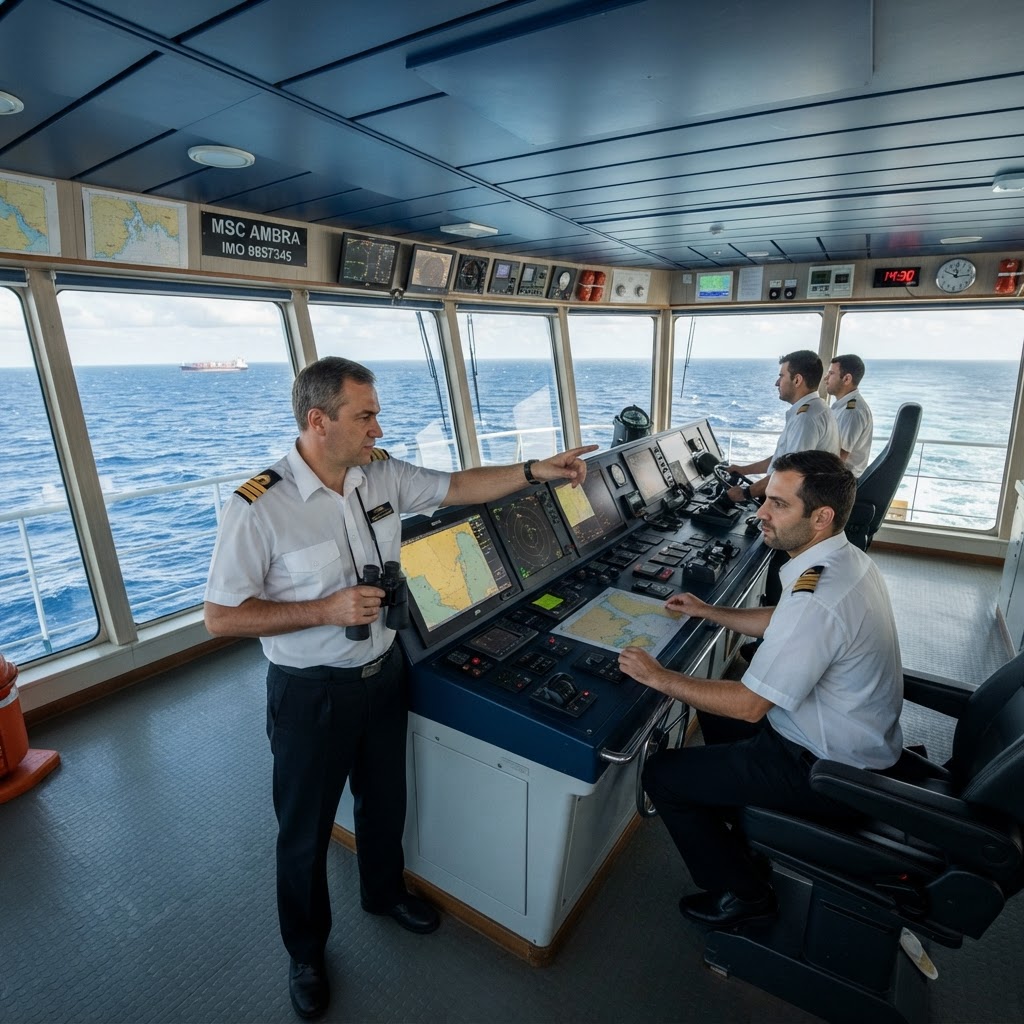
When Is Monitoring Crew Fatigue Critical? MCA OOW & Chief Mate Oral Exam Guide
Direct Answer: When High Workload is Expected
During your MCA oral exam, when asked under which condition monitoring crew fatigue is critical to bridge operations, the most precise answer is: when a high workload is expected. While fatigue management is a constant requirement under the STCW code, it becomes absolutely critical during periods of high operational intensity because the cognitive load on the Officer of the Watch (OOW) and bridge team significantly impairs situational awareness and decision-making capabilities.
Why This Question Matters for Your Exam
The examiner is testing your ability to move beyond textbook definitions and apply the principles of Bridge Resource Management (BRM). For both OOW and Chief Mate candidates—whether you are aiming for <3000GT or Unlimited certification—the examiner wants to see that you understand the link between human performance and bridge safety. They aren't looking for a recite of the STCW hours of rest; they are looking for your ability to identify high-risk scenarios before they manifest as an incident.
The Relationship Between Workload and Error
When you are under pressure—for instance, during a complex pilotage, heavy weather, or emergency maneuvers—the risk of fatigue-related error increases exponentially. Fatigue acts as a "performance degrader." It reduces your ability to process information, slows your reaction time, and, crucially, increases the likelihood of channelized attention (focusing on one task while ignoring others).
Practical Scenarios: When to Flag Fatigue
To impress the examiner, you must be able to cite specific conditions where workload peaks and fatigue monitoring must become a priority:
- High-Traffic Density: Navigating through areas like the Dover Strait or the Singapore Strait where constant radar plotting and visual lookout are required.
- Restricted Visibility: When navigating in fog, the increased cognitive load of monitoring AIS, ARPA, and listening for sound signals leads to rapid mental exhaustion.
- Heavy Weather: The physical effort required just to maintain balance on the bridge, combined with the stress of monitoring vessel stability, rapidly depletes energy reserves.
- Complex Pilotage or Berthing: During maneuvers requiring constant communication with tugs, the pilot, and mooring stations, the OOW has very little margin for error.
Examiner Expectations: Beyond the Basics
When discussing this in your MCA oral exam, don't just stop at "high workload." Expand your answer to include mitigation strategies. The examiner will likely follow up with: "So, how do you manage it if you notice your lookout is struggling?"
Common Pitfalls for Candidates
- Ignoring the Human Factor: Many candidates focus solely on technical equipment. A top-tier answer acknowledges that the bridge team is the most important component of the bridge system.
- Lack of Authority: Candidates often hesitate to say they would stop the operation. As an Officer of the Watch, you must demonstrate that you have the authority to speak up if your team is unfit to work.
- Static Answers: The examiner knows the rules. They want to hear about your experience. Mention how you would utilize a 'Briefing' before entering high-workload areas to assess the alertness of the team.
Effective Strategies for the OOW
If you have identified that a high-workload period is approaching, you should discuss these proactive steps during your Chief Mate or OOW oral:
- Pre-Watch Briefing: Ensure the relieving officer or the lookout is aware of the upcoming challenges. Ask: "How are you feeling? Are you rested?"
- Task Management: If the workload is excessive, do not hesitate to call the Master to the bridge. This is not a sign of weakness; it is a sign of a professional Officer of the Watch who understands their limits.
- Environmental Adjustments: Keep the bridge environment conducive to alertness (manage lighting, temperature, and noise levels).
- Frequent Communication: Use closed-loop communication to verify that your team has heard and understood orders. Fatigue often manifests as a failure to communicate effectively.
Conclusion: The Professional Standard
Monitoring crew fatigue is not just an administrative task of logging hours; it is a vital safety barrier. For your MCA oral exam, remember that fatigue management is most critical during high-workload periods because that is exactly when the cost of a human error is highest.
By demonstrating that you can proactively identify these high-pressure periods and manage your team's alertness, you show the examiner that you are prepared for the responsibilities of an Unlimited or <3000GT watchkeeper. Focus on situational awareness, assertive communication, and knowing when to call for additional support. That is the hallmark of a safe and capable officer.